

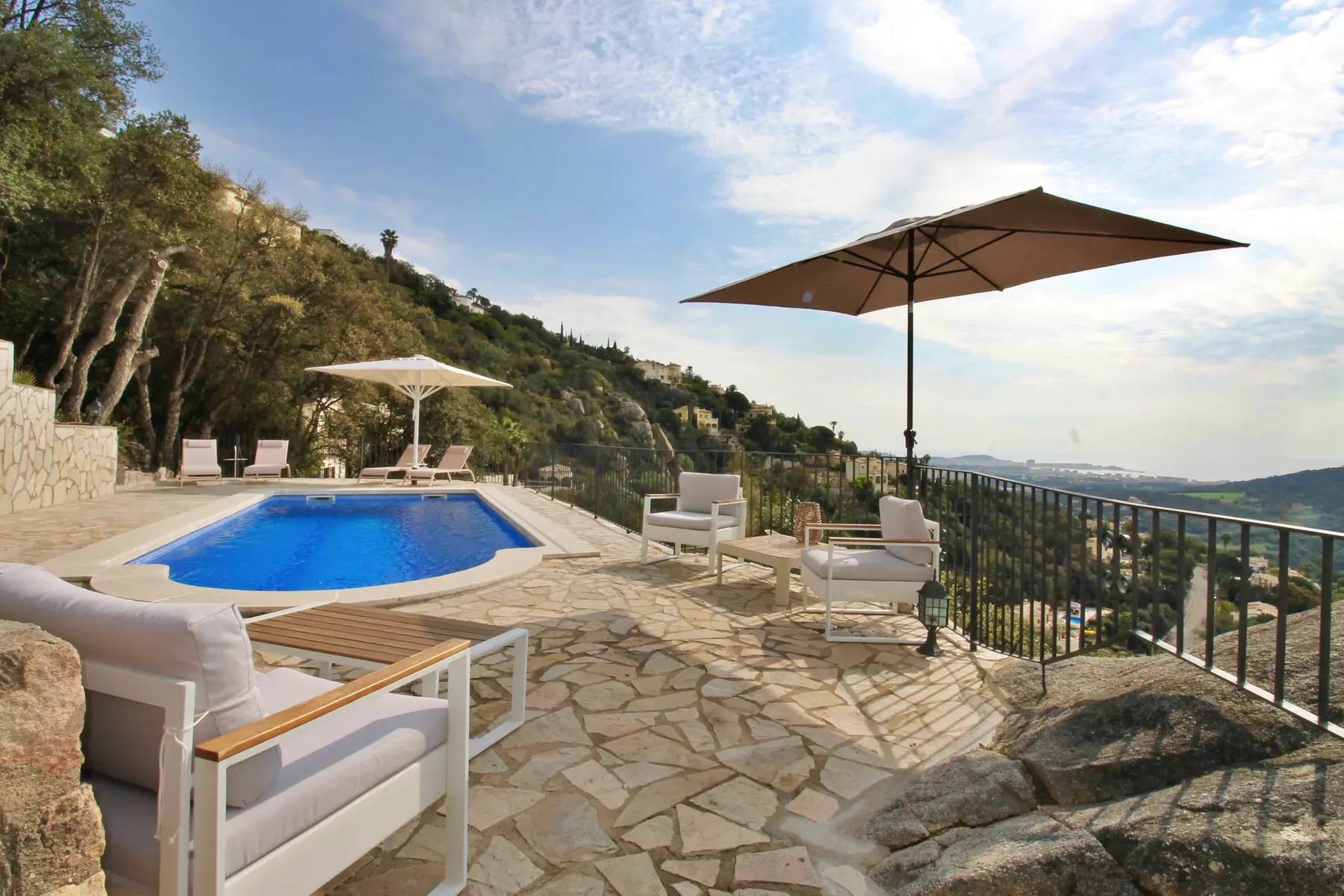
Houses for sale
Property for sale in Palafrugell
Palafrugell is an inland market town of about 24,500 people with three of the Costa Brava's best-known coastal villages: Calella, Llafranc and Tamariu. You can live in the town or right on the water.
Why here
What buying in Palafrugell is really like
The town itself sits about three kilometres from the sea, with a covered market open every day except Monday, a Sunday market, schools and shops that run all year. Its coast, about twelve kilometres of coves and small beaches, belongs to three former fishing villages that each have a character of their own.
That gives buyers a real choice. In the town you get year-round life and everything within reach. In the villages you get the sea outside the door and a much quieter winter. We sell across the whole municipality and can look after the house wherever it is.
In the town the market is mainly apartments and townhouses, with older houses in the centre that often need work. In the villages it is fishermen's houses, apartments near the beaches and villas on the headlands, and very little of it comes up.
The town
A cork town by the sea
Palafrugell was first documented in 988, and people lived on the hill of Sant Sebastià as early as the sixth century before Christ. The town grew rich on cork: the first workshops appear in 1761, and by 1913 there were 27 factories employing around 3,500 people. The Museu del Suro in the centre tells that story.
One of the landmarks of that time is Can Mario, a modernista water tower, now home to a sculpture museum. Tourism arrived from the mid-1950s, the marina at Llafranc was built in 1963, and the villages slowly became what they are today. Every July, Calella still holds its cantada d'havaneres, the sea songs that have been sung on its beach since 1967.
Where exactly
Areas in and around Palafrugell
The municipality is really four places. These three coastal villages are where most buyers start looking.
Llafranc
A bay with a sandy beach of about 360 metres, a small marina and mostly detached houses on the slopes, some of them fine villas from the 1930s. The lighthouse of Sant Sebastià stands on the headland above.
Calella de Palafrugell
The most photographed of the three: two-storey fishermen's houses with vaulted boat stores along the beaches of Port Bo and Canadell, narrow whitewashed streets, and the Cap Roig gardens at the southern end.
Tamariu
The smallest and quietest, a former fishing hamlet in a cove to the north, which only became a holiday village from the 1980s. About 300 people live there all year.
Practical
What you actually need to know
- Girona airport
- About 49 km by road, roughly forty-five minutes.
- Barcelona airport
- About 136 km, around an hour and forty minutes outside the August traffic.
- Markets
- The covered market opens every day except Monday, and the weekly market is on Sunday.
- Roads
- The C-66 links the town with Girona, and the C-31 runs past it towards Palamós. Separate roads go down to each of the villages.
- Hospital
- Palafrugell has its own health centre. The Hospital de Palamós, which serves the whole Baix Empordà, is the nearest hospital.
- The villages in winter
- Calella, Llafranc and Tamariu are much quieter out of season, and some restaurants close. The town stays fully open.
Good to know
Buying in Palafrugell: the questions we get
Should I buy in Palafrugell town or in one of the villages?
It depends on how you will use the house. The town is practical all year. The villages are on the water and much quieter in winter. Many buyers live in the town and walk or drive to the coast, which is only a few minutes away.
What kind of properties come up in Palafrugell?
In the town, apartments, townhouses and older houses in the centre. In Calella, Llafranc and Tamariu, fishermen's houses, apartments and villas, with very little on the market at any time.
Is Palafrugell a good place to live all year?
The town is, with its daily market, schools, health centre and shops. The coastal villages have a small year-round population and are much quieter in winter.
Can I rent my house out in Palafrugell?
Holiday letting in Catalonia requires a tourist licence registered against the specific property. Never assume a house comes with one. We check the position before you commit, and our sister company Quality Renting handles the letting itself.
How far is Palafrugell from the airport?
Girona airport is about 49 km by road, roughly forty-five minutes. Barcelona airport is about 136 km and takes around an hour and forty minutes outside the August traffic.
Can you look after a house in Calella or Llafranc?
Yes. We hold the keys, check the house on a rhythm agreed with you, and take care of the garden, the pool and repairs with our own team.
Next step
Thinking about Palafrugell?
Come and see it with someone who lives here. We will show you the parts of Palafrugell that suit what you are after, and say so when something does not.